Quandela Quantum Computer
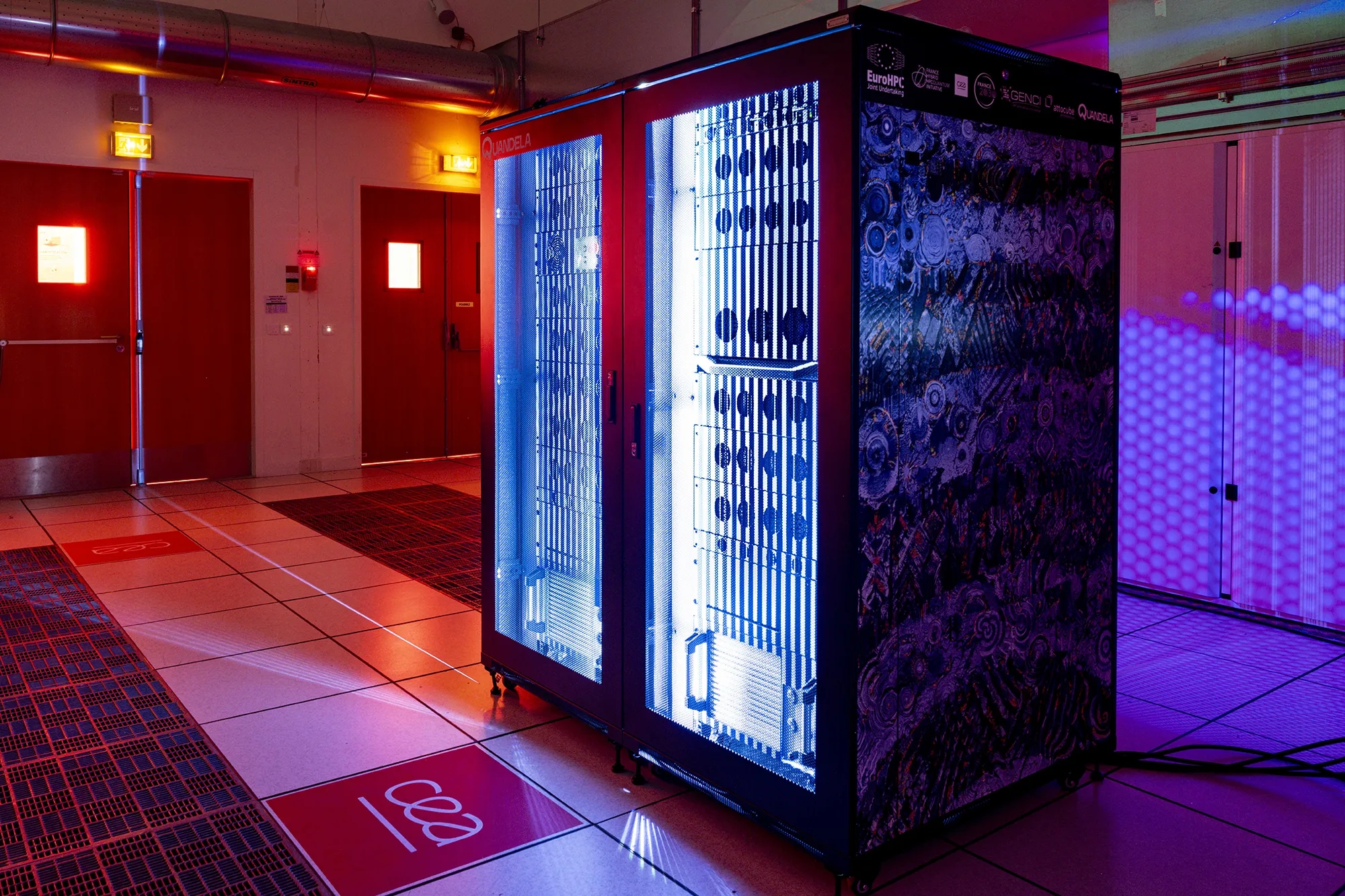
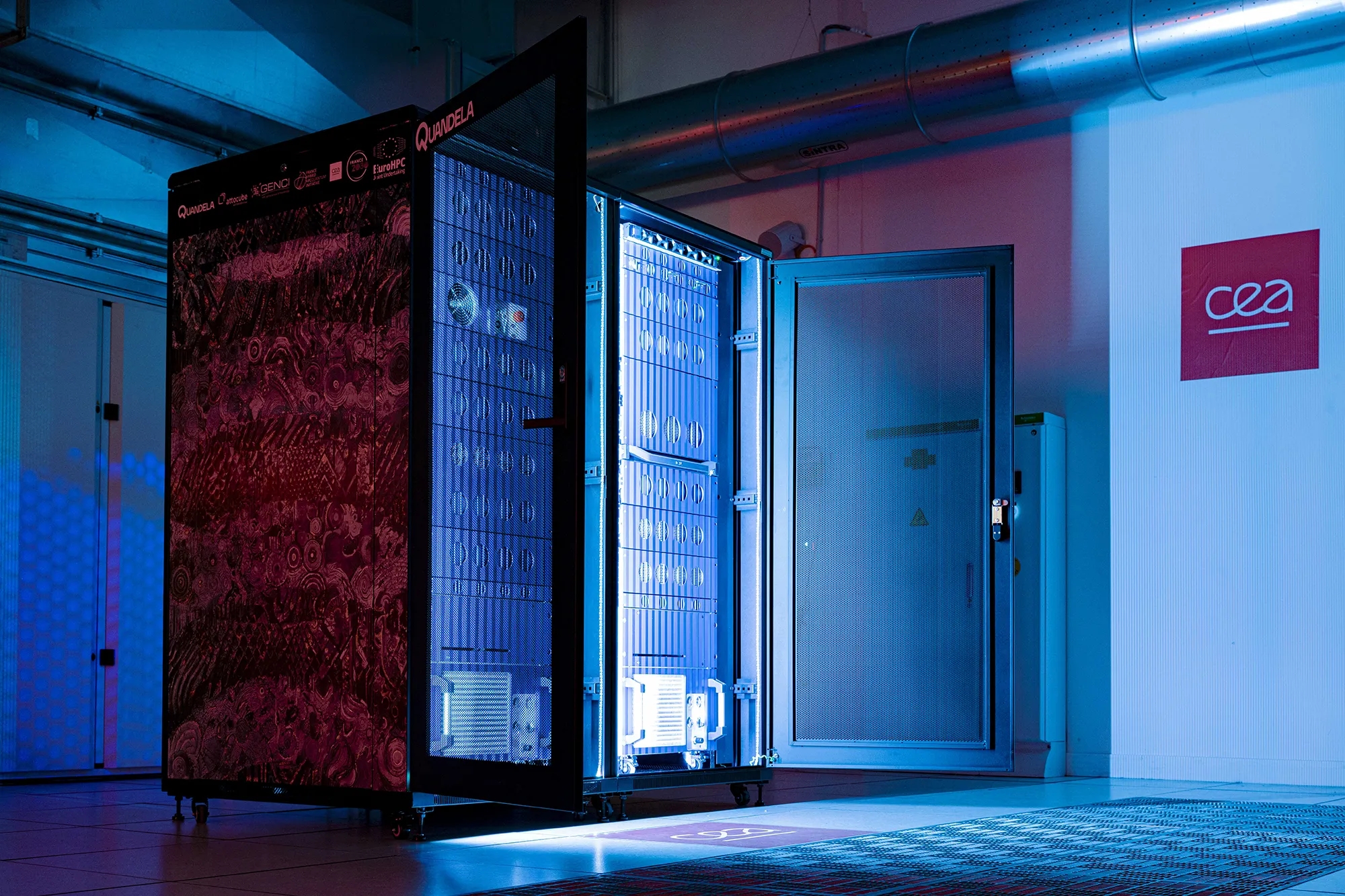
Quandela develops a leading photonic quantum computer that uses single photons and precise optical circuits to explore new forms of computation. This technology allows to perform quantum computation using light.
Obvious is drawn to quantum technology for its blend of science and imagination. The behavior of light, uncertainty, entanglement and superposition are all conceptual paths which allow for artists to explore new depths of creativity.
A fresco based on interferences
For the creation of this artwork, Obvious designed a real quantum circuit and used its calculations to guide how each visual zone takes shape. This method allows to balance harmony and randomness, since every pattern emerges from probabilistic choices within the circuit.
Obvious used their fresco generation algorithm Sinopia to create the final visual. This algorithm allows for the creation of extremely detailed visuals with a high level of control on each zone of the artwork, delimited using the quantum process.

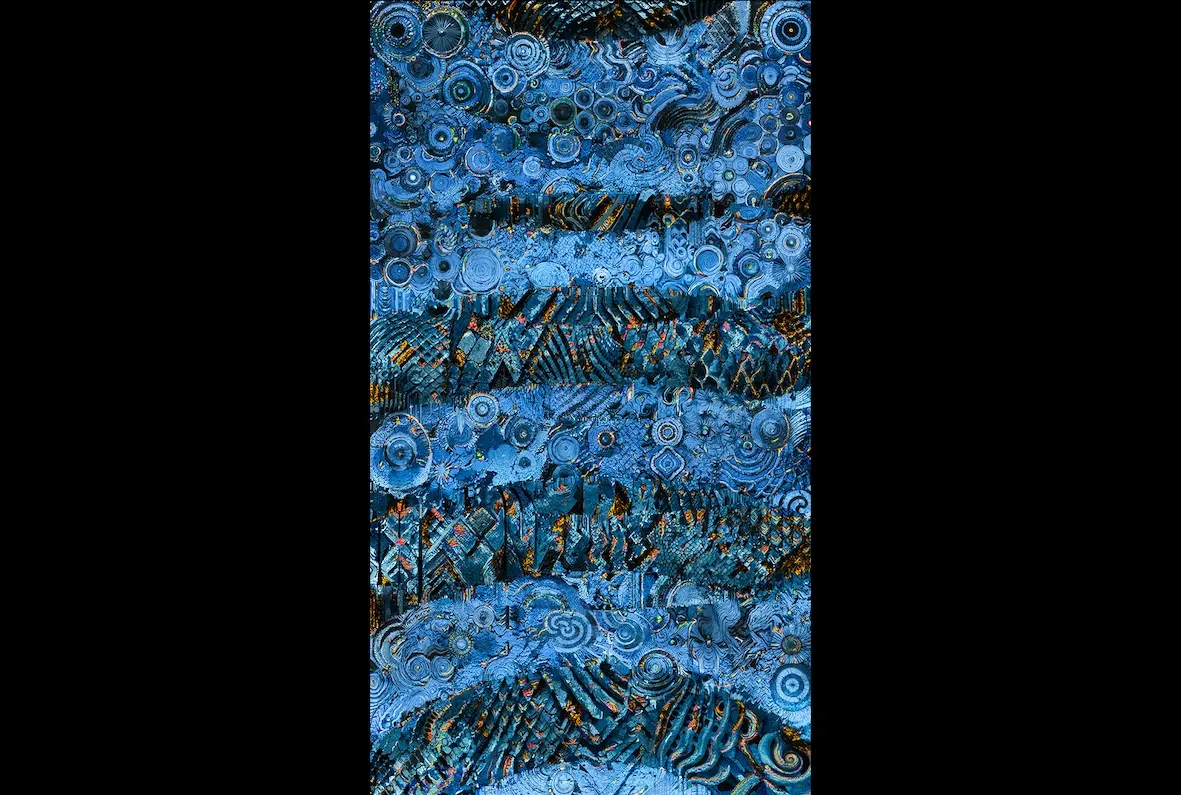
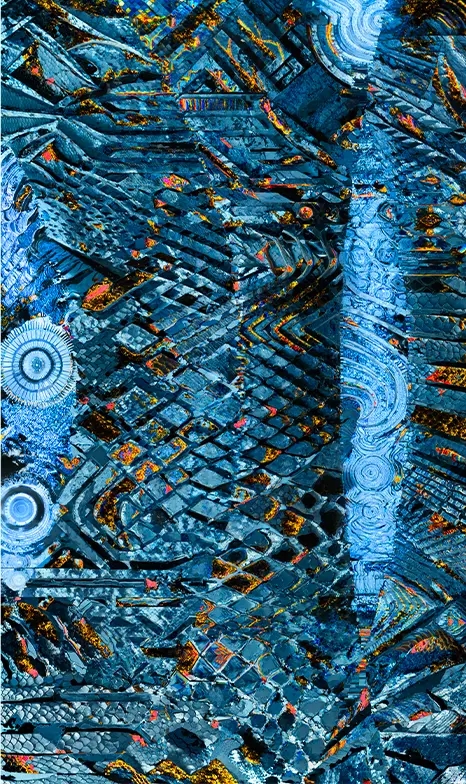
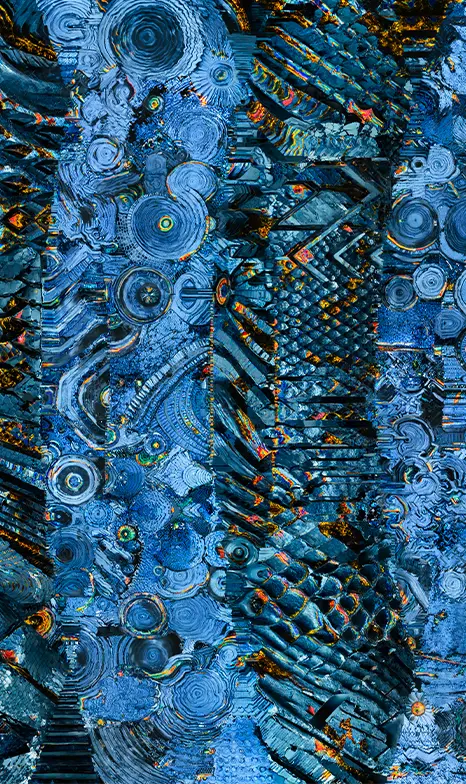
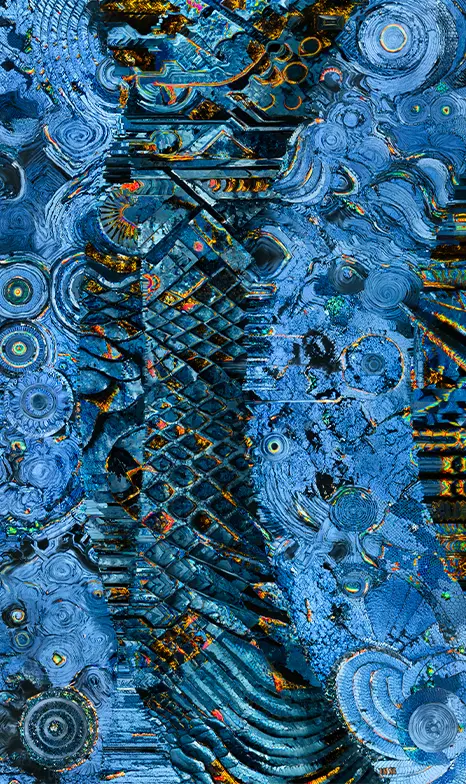
Quantum Gaze, a reference to Medusa
The title Quantum Gaze echoes the myth of Medusa, whose stare turns matter to stone. It mirrors the quantum act of observation, where watching a system collapses its wave function and fixes the state of its particles.
The texture of the works is inspired by serpent scales and mineral rock patterns seen under polarized light, as a reference to polarized photons, a notion at the core of Quandela's quantum computing technology.
A Quantum computer at the CEA
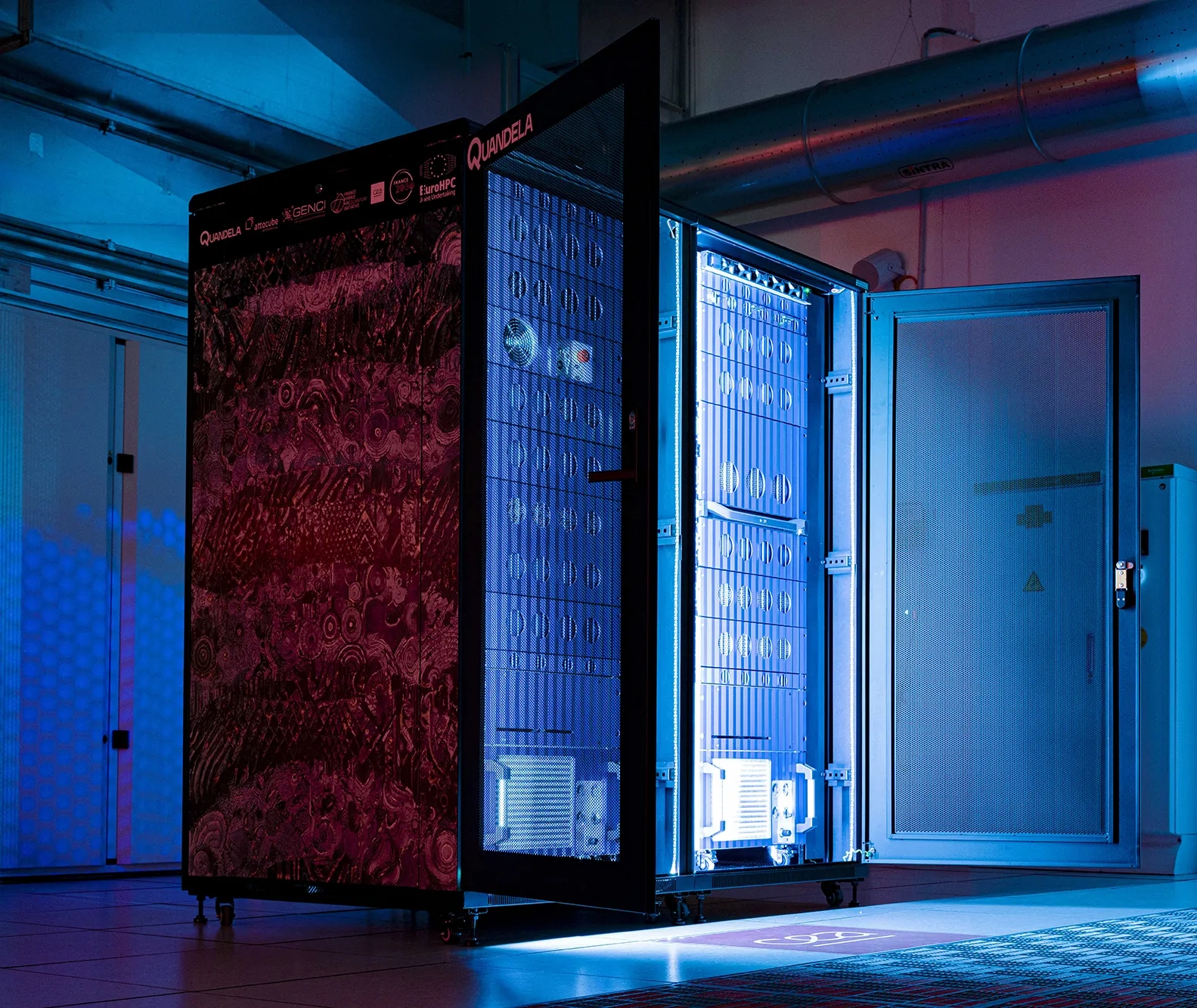
The Quandela computer inscribed with the Quantum Gaze artwork was purchased by the TGCC, a site of the CEA, the French instance for atomic energy.
This visual landscape depicted on the computer is shaped by both computation and geology will help leading and inspiring the next generation of research, and is another statement of Obvious' fascination with the future of technologies.